
Jannat Nursery offers a stunning selection of permanent flowering plants, perfect for vibrant gardens. Enjoy year-round blooms, easy maintenance, and a touch of natural beauty.
Permanent Flowering Plants
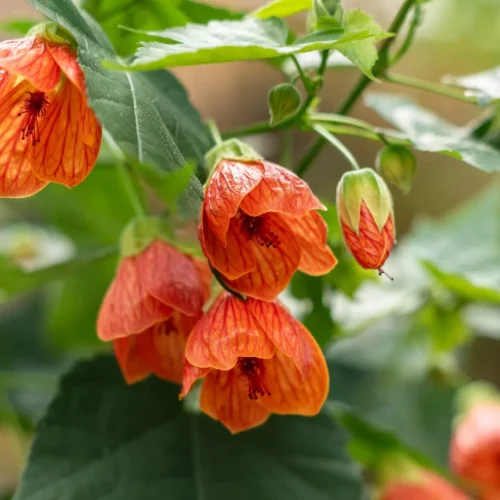
Abetlon flowers, commonly known as flowering maples or Chinese lanterns, are admired for their stunning bell-shaped blooms and vibrant foliage. Native to tropical and subtropical regions, these plants belong to the mallow family and are prized for their year-round flowering capabilities in the right conditions.
The flowers come in a variety of hues, including shades of red, orange, yellow, and pink, often adorned with intricate veining patterns.
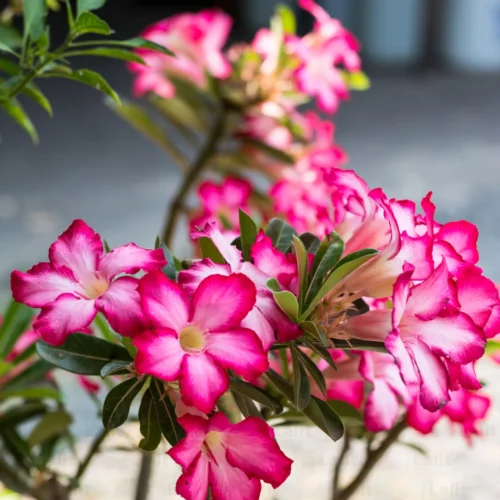
Adenium Cleodendron, often referred to as the "Desert Rose," is a captivating succulent plant prized for its striking appearance and adaptability. Native to arid regions, this plant is well-suited to warm climates and is a favorite among succulent enthusiasts for its unique growth habit and beautiful blooms.
Adenium Cleodendron produces trumpet-shaped blossoms in shades of pink, red, white, or a combination of these, adding vibrant color to any space.
Adenium Cleodendron produces trumpet-shaped blossoms in shades of pink, red, white, or a combination of these, adding vibrant color to any space.
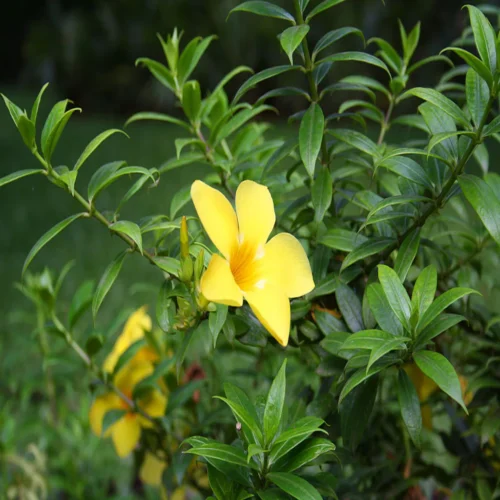
Allamanda, often called the "Golden Trumpet" or "Yellow Bell," is a tropical flowering plant admired for its vibrant and cheerful blossoms. Belonging to the Apocynaceae family, Allamanda is native to South and Central America and thrives in warm, humid climates.
The plant produces large, trumpet-shaped flowers in brilliant shades of yellow, though some varieties feature hues of purple or pink. These blooms are complemented by glossy, green, lance-shaped leaves that enhance the plant's ornamental appeal. Allamanda flowers exude a subtle fragrance, adding to their charm.
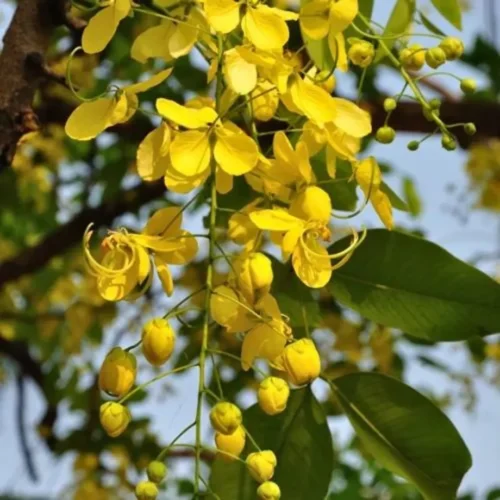
The Amaltas, scientifically known as Cassia fistula, is a breathtakingly beautiful deciduous tree celebrated for its stunning golden-yellow flower clusters. Commonly referred to as the "Golden Shower Tree," it is native to the Indian subcontinent and Southeast Asia, and it thrives in tropical and subtropical regions.
During the blooming season, the Amaltas is adorned with cascading racemes of bright yellow flowers, which can be up to 60 cm long. These flowers create a spectacular display, especially against the tree’s green foliage or bare branches, as it sheds leaves during the flowering period.
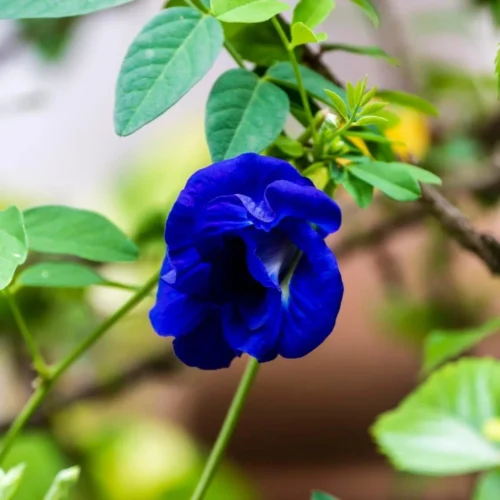
The Aparajita flower, scientifically known as Clitoria ternatea and commonly called the Butterfly Pea, is a stunning and versatile climber plant. Native to Asia, this plant is widely appreciated for its vibrant, eye-catching flowers and various medicinal and cultural uses.
The Aparajita blooms are most commonly deep blue with a white or yellow center, though varieties with purple, pink, or white flowers also exist. The petals are shaped like butterfly wings, giving the plant its name. Its delicate flowers and lush green foliage make it a popular choice for trellises, fences, or ornamental arches.
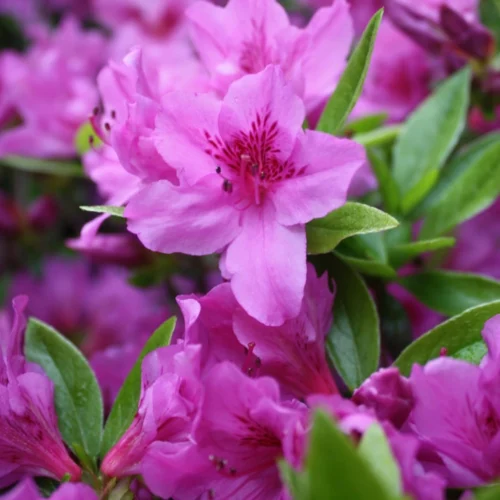
Azaleas are stunning, flowering shrubs belonging to the Rhododendron genus, renowned for their breathtaking display of blooms. Native to Asia, Europe, and North America, these plants are cherished for their vibrant colors and lush appearance, making them a favorite in gardens and landscapes worldwide.
Azalea flowers come in a dazzling range of colors, including shades of pink, red, white, orange, purple, and yellow. The flowers are typically trumpet- or funnel-shaped and can vary in size, depending on the species and cultivar. Azaleas often bloom in spring, creating a vivid burst of color that transforms any garden into a visual masterpiece.
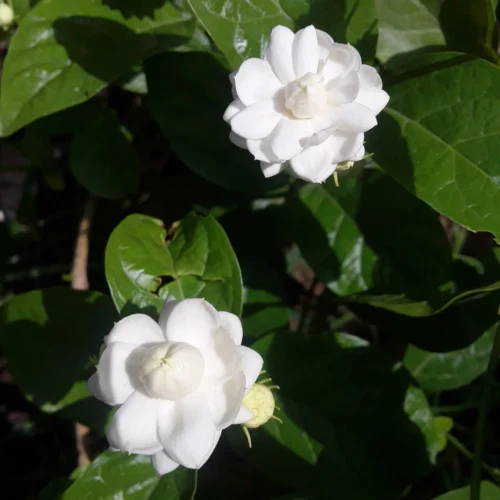
The Bela flower, also known as Arabian Jasmine (Jasminum sambac), is a fragrant and enchanting flower cherished for its beauty and cultural significance. Native to South and Southeast Asia, it is revered in traditional rituals, religious ceremonies, and as a symbol of purity and love.
Bela flowers are small, white, and star-shaped, with a delicate, waxy texture. Their captivating fragrance is sweet and long-lasting, making them a popular choice for garlands, perfumes, and essential oils. The flowers bloom in clusters on a shrub or vine that features dark green, glossy leaves, creating a striking contrast against the pristine white blossoms.
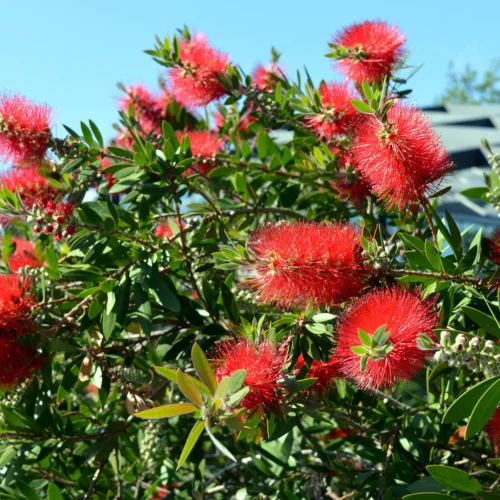
The flowers are typically bright red, though some varieties may display shades of pink, yellow, or white. The "bristles" are actually stamens, which give the flower its characteristic bottle-brush shape. These eye-catching blooms are complemented by narrow, lance-shaped green leaves and a woody stem, adding to the plant's charm.
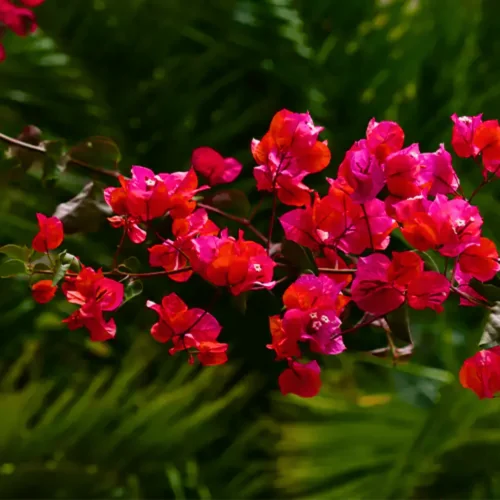
splash of color to gardens, walls, and fences.
What appear to be flowers are actually papery bracts surrounding the plant's small, tubular white flowers. These bracts come in an array of striking colors, including magenta, pink, red, orange, yellow, purple, and white. The plant features thorny stems and heart-shaped green leaves, with a climbing or trailing growth habit.
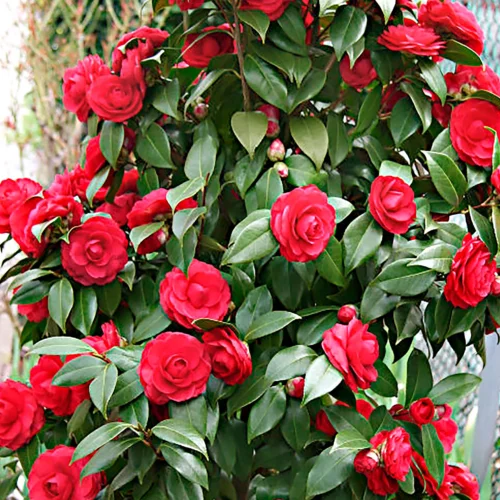
The Camellia flower is a symbol of elegance and beauty, cherished for its exquisite blooms and glossy green foliage. Native to Asia, particularly Japan, China, and Korea, Camellias belong to the Camellia genus, which includes over 300 species.
The flowers range from small to large and are available in various shades, including white, pink, red, and occasionally yellow. They can be single, semi-double, or double in form, resembling roses or peonies. Blooming in late winter to early spring, Camellias bring life to gardens when few other plants are in flower.
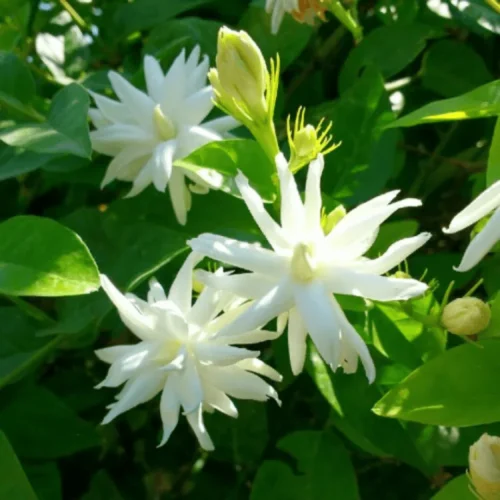
Chameli, commonly known as Jasmine (Jasminum species), is a beautiful and fragrant flowering plant cherished for its delicate blossoms and sweet scent. Widely cultivated in tropical and subtropical regions, Chameli is often associated with cultural and spiritual significance, especially in India, where it is used in religious rituals and festivals.
The flowers are small, white, or sometimes yellow, with a star-like shape and a soft, waxy texture. Their rich, heady fragrance is one of the most prized in the floral world, making Chameli a favorite for perfumes, essential oils, and garlands. The plant typically features dark green, glossy leaves and a sprawling or climbing growth habit, depending on the variety.
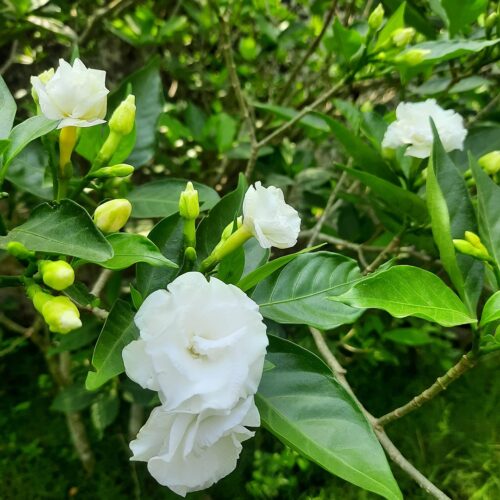
Chandini, often referred to as Chandni, is a variety of Jasmine, particularly Jasminum sambac, and is highly prized for its delicate beauty and intoxicating fragrance. The name "Chandini" is derived from the Hindi word for "moonlight," reflecting the soft, white, and luminous appearance of the flowers, which bloom during the evening and night, releasing their sweet scent.
The flowers of Chandini are small, white, star-shaped, and grow in clusters, with a soft, waxy texture. Known for their calming and soothing fragrance, they are widely used in perfumes, essential oils, and religious offerings, often symbolizing purity and beauty.
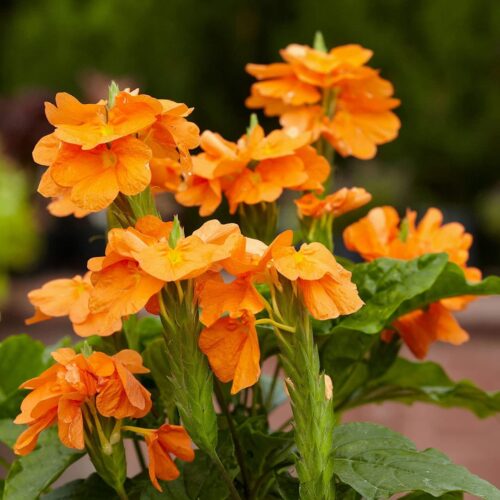
Crossandra, also known as the "Firecracker Flower" or "Shrimp Plant," is a vibrant and ornamental flowering plant native to tropical regions of India and Sri Lanka. Known for its striking and colorful blooms, it is a popular choice for gardens and landscapes, especially in warm climates.
The flowers of Crossandra are tubular and appear in a range of vivid colors, including orange, red, yellow, and pink. The petals are often fringed and slightly ruffled, creating an eye-catching, fiery appearance. The plant produces blooms in clusters, set against lush, glossy green foliage, adding to its ornamental appeal. Crossandra flowers are often seen in summer and rainy seasons, bringing bright color to gardens.
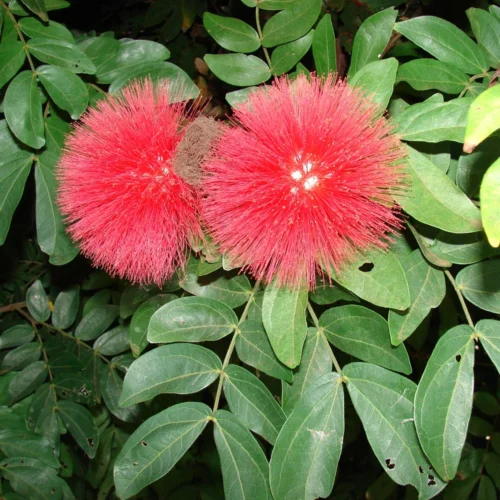
Calliandra is a genus of flowering plants belonging to the family Mimosaceae, often referred to as the Powder Puff or Fairy Duster due to the unique appearance of its blooms. Native to tropical and subtropical regions of the Americas and Southeast Asia, Calliandra is a popular ornamental plant known for its striking, puff-like flowers and attractive foliage.
The flowers of Calliandra are distinctive, with numerous long, thread-like stamens that give them a fluffy, ball-shaped appearance. These "puffs" are typically red, pink, or white, with a soft, delicate texture. The flowers are borne in dense clusters and create a vibrant, showy display that attracts pollinators like bees, butterflies, and hummingbirds. Calliandra blooms throughout the year, depending on the climate, and the flowering season often coincides with the plant's peak growth.
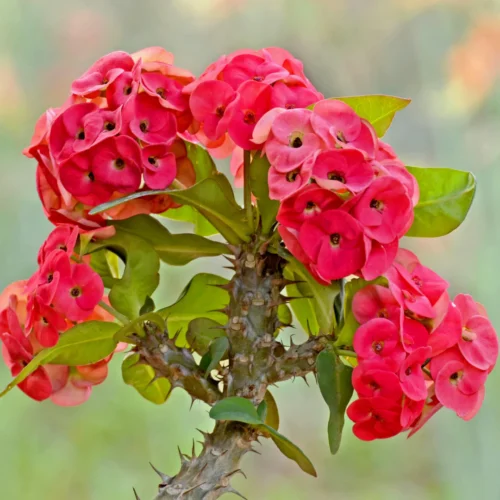
Euphorbia Milii, commonly known as the Crown of Thorns, is a unique and hardy flowering plant native to Madagascar. This succulent shrub is renowned for its vibrant, colorful bracts and its spiny, drought-tolerant nature. Despite the thorns, it’s an easy-to-care-for plant that thrives in warm, dry climates.
The plant produces clusters of small, inconspicuous flowers surrounded by brightly colored bracts in shades of red, pink, orange, yellow, or white. These colorful bracts are what give the plant its striking appearance, often making it look like a crown of fiery petals. The dark green, leathery leaves complement the vivid flowers and give the plant a full, bushy appearance.
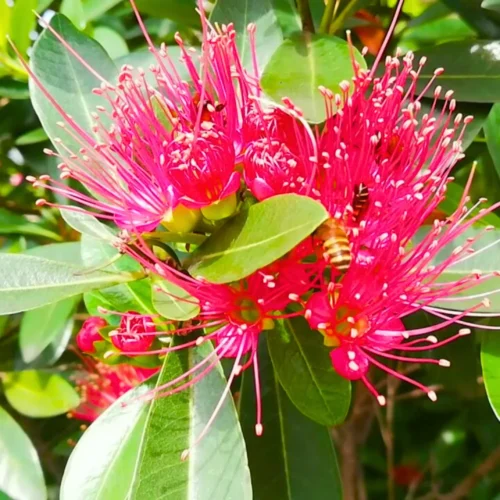
The "First Love" flower is often used to describe a specific variety of flowers known for their soft, romantic appeal. While there isn't a single botanical species specifically named "First Love," the term is commonly used to refer to flowers that symbolize the purity, beauty, and emotional significance associated with one's first romantic experience. Flowers like roses, lilies, cherry blossoms, or white jasmine are frequently connected with the concept of first love due to their symbolism in romance and affection.
For example, roses, particularly pink or white ones, are classic symbols of love and innocence, often representing new love or young love. Similarly, cherry blossoms, with their delicate, fleeting blooms, symbolize the transience and beauty of love at first sight.
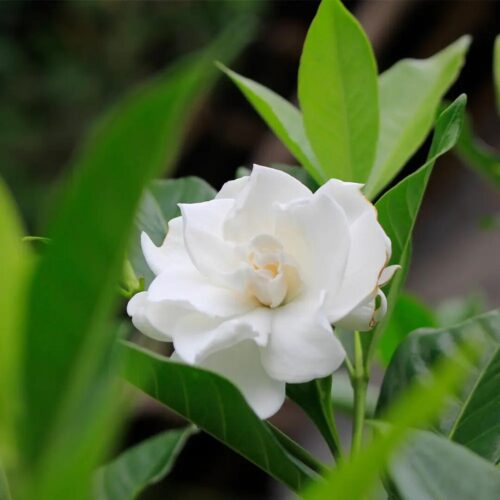
Gandhraj, also known as Kesar or Champaka (Michelia champaca), is a highly fragrant and revered flowering plant native to Southeast Asia, particularly India. The flower is known for its sweet, intoxicating fragrance that is often associated with purity, spirituality, and beauty.
Gandhraj flowers are large, with silky, waxy petals that are typically yellow or golden in color, although they can also be found in shades of white or orange. The blooms are fragrant and bloom in clusters, exuding a strong, pleasant scent that is cherished in perfumes, incense, and religious offerings. The tree that bears these flowers has glossy, dark green leaves and can grow quite large, typically between 15 to 25 feet (4.5 to 7.6 meters) in height.
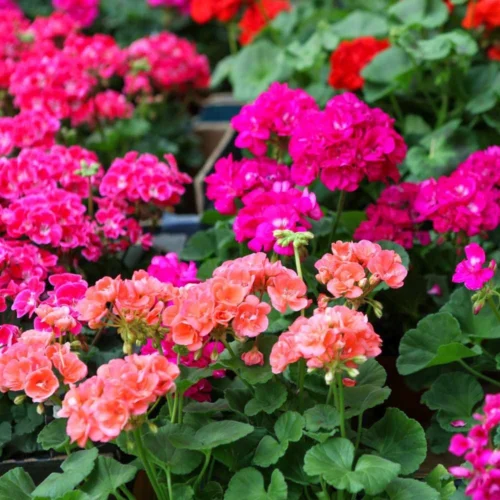
Geraniums are vibrant and popular flowering plants known for their colorful blooms and easy-care nature. Often cultivated as bedding plants or in pots, they are a favorite in gardens and landscapes. Native to southern Africa, the Pelargonium species (which is commonly referred to as "geranium") has many hybrids, offering a wide range of colors, including pink, red, white, purple, and orange.
The flowers are typically round, with five petals that may be smooth or ruffled, and they appear in clusters or as single blooms. Their distinct, often fragrant flowers are set against dark green, rounded or lobed leaves, which can add texture to gardens.
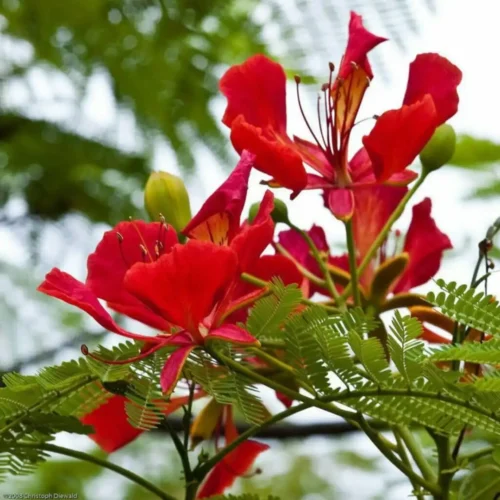
Gulmohar, also known as the Flamboyant Tree (Delonix regia), is a striking and fast-growing flowering tree native to Madagascar, though it is now widely cultivated in tropical and subtropical regions around the world. The Gulmohar tree is especially renowned for its vibrant, flame-colored blooms that create an incredible spectacle during the flowering season.
The flowers are large, with five petal-like sepals, and they come in shades of bright red, orange, and yellow, often with streaks or markings of contrasting colors. These stunning blooms are grouped in large clusters, resembling fiery bursts of color against the backdrop of lush green foliage. The leaves of the Gulmohar tree are finely divided, fern-like, and provide a delicate contrast to the boldness of its flowers.
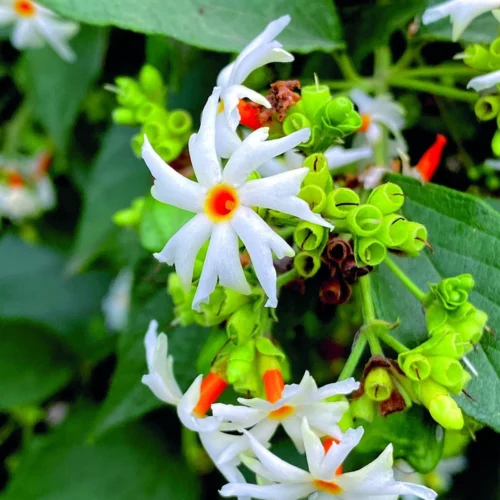
Harsingar, also known as Parijat (Nyctanthes arbor-tristis), is a fragrant and visually striking flowering plant native to Southeast Asia, particularly India. The name "Harsingar" is derived from the Hindi word for "night-flowering jasmine," as it is known for its sweet fragrance that intensifies at night.
The flowers of Harsingar are small, with five white, long, narrow petals that curl slightly at the edges, and a bright orange center, giving the blooms a star-like appearance. They are highly aromatic, releasing a delicate yet intense fragrance that makes them popular in perfumes and religious offerings. These flowers bloom primarily at night and fall by morning, carpeting the ground with their beautiful, fragrant blooms.
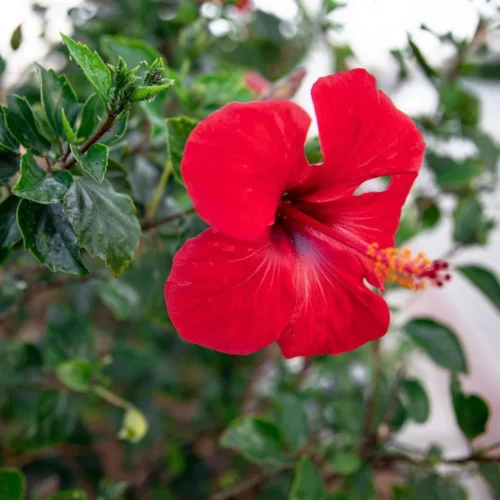
Hibiscus is a striking and popular flowering plant that is admired for its large, showy blooms and tropical appeal. Belonging to the Hibiscus genus, this plant is native to tropical and subtropical regions around the world. Hibiscus flowers come in a variety of vibrant colors, including red, pink, orange, yellow, purple, and white, with some species featuring multi-colored blooms. The flowers are typically large, with five petals that can be smooth or slightly ruffled, and they have a central prominent stamen that often extends beyond the petals, adding to their visual appeal.
Hibiscus plants can be shrubs, small trees, or herbaceous perennials, depending on the species and climate. They have broad, glossy green leaves and produce flowers that last a single day, blooming in the morning and fading by evening, but new blooms continue to appear throughout the growing season.
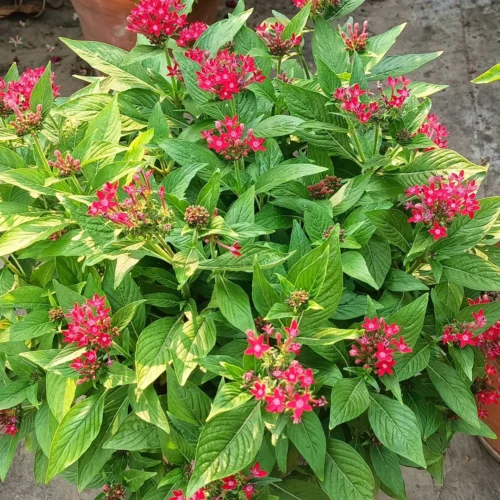
Himalaya Pentas, scientifically known as Pentas lanceolata, is an attractive and hardy flowering plant that belongs to the Rubiaceae family. Native to tropical regions of Africa, this plant has gained popularity in gardens and landscapes worldwide due to its vibrant blooms and low-maintenance care. It is often referred to as "Egyptian Star Flower" due to the star-like shape of its blossoms.
The flowers of Himalaya Pentas are small, star-shaped, and come in a range of colors, including pink, red, purple, and white. These flowers grow in dense clusters at the tips of the branches, creating a colorful display. The plant also features lance-shaped, dark green leaves that provide a complementary backdrop to the bright blooms.
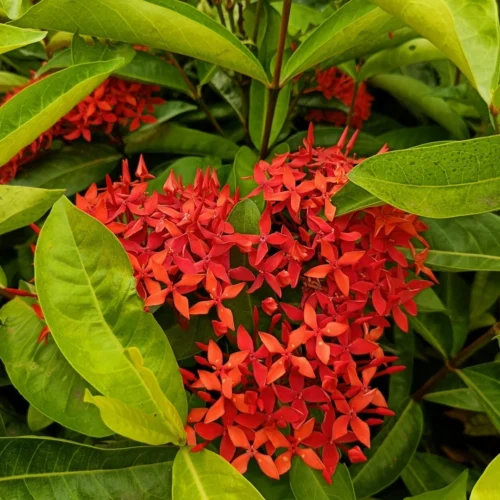
Ixora is a vibrant and tropical flowering plant known for its colorful clusters of small, star-shaped blooms. Native to tropical and subtropical regions of Asia, Ixora is a popular choice for ornamental gardens, hedges, and landscaping due to its striking appearance and easy care.
The flowers of Ixora come in a variety of bright colors, including red, pink, orange, yellow, and white. These flowers are grouped in dense, rounded clusters, creating a bold and eye-catching display. The glossy, dark green leaves of the plant complement the vivid blooms, adding texture and depth to the plant’s overall look.
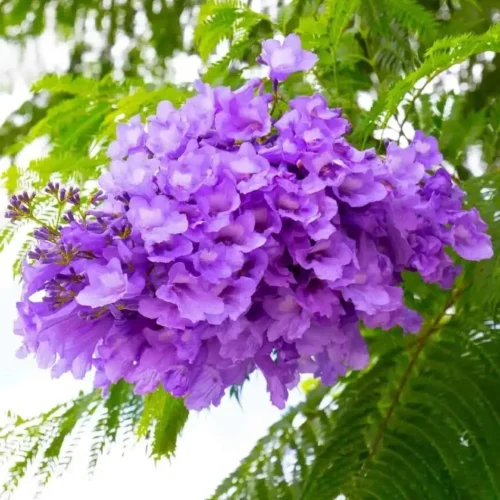
Jacaranda, scientifically known as Jacaranda mimosifolia, is a stunning flowering tree that is admired for its breathtaking purple-blue blossoms and elegant, feathery foliage. Native to South America, particularly Argentina and Brazil, it has become a popular ornamental tree in tropical and subtropical regions worldwide.
The Jacaranda tree is most famous for its vibrant clusters of trumpet-shaped flowers, which bloom in late spring to early summer. The flowers are predominantly purple or blue, creating a spectacular sight when the tree is in full bloom. In some varieties, the blooms can range from lavender to a deeper violet. The tree’s delicate, fern-like leaves provide a soft contrast to the bold flowers, and the petals often cover the ground in a beautiful carpet once they fall.
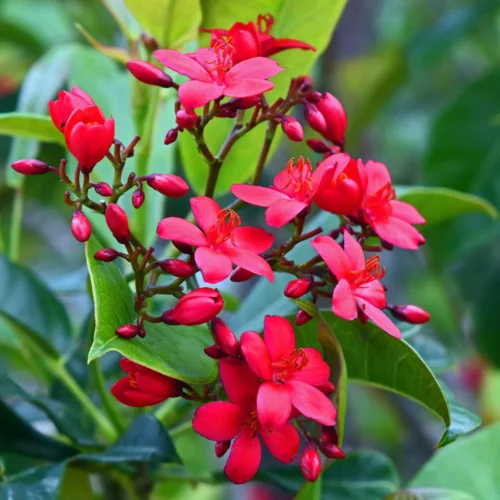
Jatropha, specifically Jatropha curcas, is a hardy and versatile flowering plant known for its striking blooms and resilience in various growing conditions. Native to Central America but widely cultivated in tropical and subtropical regions, Jatropha is recognized for its vibrant red, yellow, or pink flowers that contrast beautifully with its thick, leathery green leaves.
The flowers of Jatropha are small, star-shaped, and grow in clusters at the end of the stems. Their bright colors make them stand out against the dark green foliage, creating an eye-catching display. The plant also produces seedpods that contain oil-rich seeds, which have applications in biofuels, traditional medicine, and as an ornamental plant.
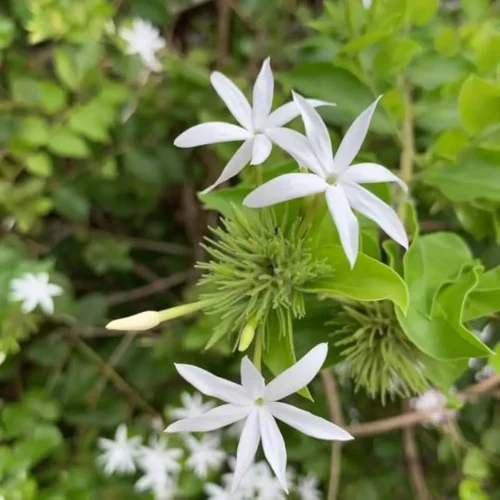
Juhi, also known as Jasmine sambac or Arabian Jasmine, is a fragrant and beautiful flowering plant native to Southeast Asia, particularly India and Sri Lanka. It is revered for its delicate, sweet scent and is considered a symbol of love, purity, and spiritual significance in many cultures.
The flowers of Juhi are small, white, and star-shaped, with waxy petals that bloom in clusters. The intense, intoxicating fragrance of Juhi flowers is one of their most cherished qualities, making them popular for use in perfumes, religious offerings, and garlands. The plant itself is a small, evergreen shrub with glossy dark green leaves, growing as a compact bush or a climbing vine in some varieties.
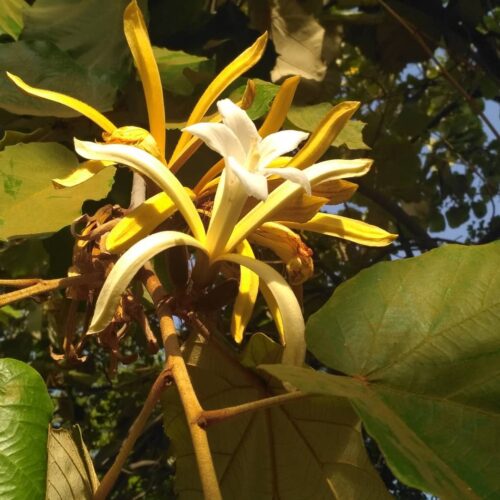
Kanak Champa, also known as Plumeria or Frangipani, is a fragrant and exotic flowering plant native to tropical regions of the Americas, though it is now widely cultivated in various parts of Asia, including India. The plant is revered for its beautiful, waxy, and aromatic flowers, which are often associated with tropical beauty and serenity.
The flowers of Kanak Champa are large, with five petals that are typically white, yellow, pink, or even a combination of these colors, often with a yellow center. The flowers have a distinct, sweet fragrance that intensifies in the evening, making them popular in perfumes, garlands, and religious offerings. The leaves are long, narrow, and dark green, providing a contrast to the vibrant blooms.
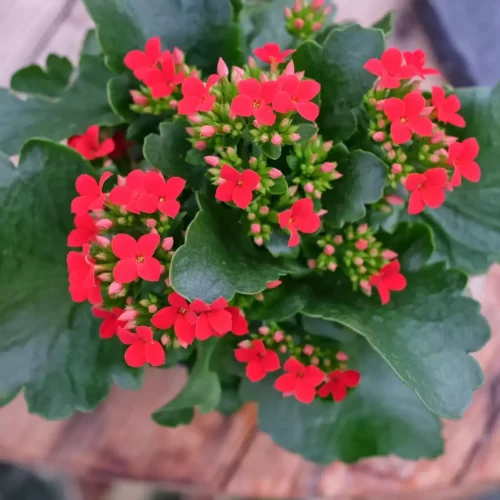
Kalanchoe Desi, commonly known as the "Desi Kalanchoe" or simply a variety of Kalanchoe, is a variant of the popular Kalanchoe genus that is often cultivated for its beautiful, vibrant flowers and succulent leaves. Similar to other Kalanchoe species, it is a hardy, low-maintenance plant that thrives in a variety of environments, making it a popular choice in both gardens and homes.
The flowers of Kalanchoe Desi are typically small, tubular, and appear in dense clusters at the top of the plant’s stems. The blooms come in a wide range of colors, including red, pink, orange, yellow, and white, making it a versatile addition to any floral arrangement or garden. The bright colors contrast beautifully with the plant's thick, fleshy, and dark green leaves, adding to its visual appeal.
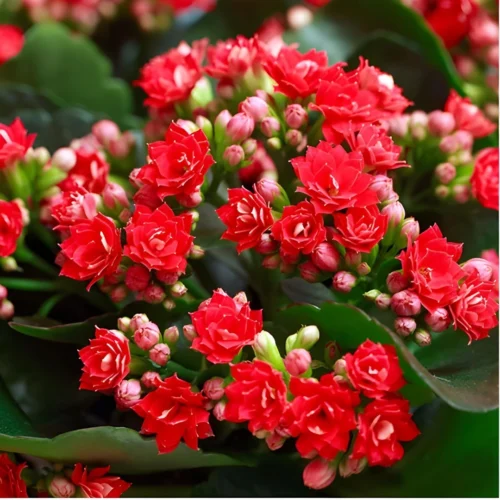
Kalanchoe Hybrid refers to a variety of hybrid plants within the Kalanchoe genus, which have been selectively bred to enhance specific traits such as flower color, size, or overall growth characteristics. These hybrids are popular for their vibrant, long-lasting blooms and ease of care, making them ideal for both home gardens and indoor spaces.
The flowers of Kalanchoe hybrids are typically small, tubular, and bloom in dense clusters. They come in a wide spectrum of colors, including red, pink, yellow, white, orange, and even multi-colored variations. These hybrids often produce more abundant and vibrant flowers compared to their parent species, creating an eye-catching display. The succulent leaves are thick and fleshy, with a waxy texture, which helps the plant conserve water and thrive in dry conditions.
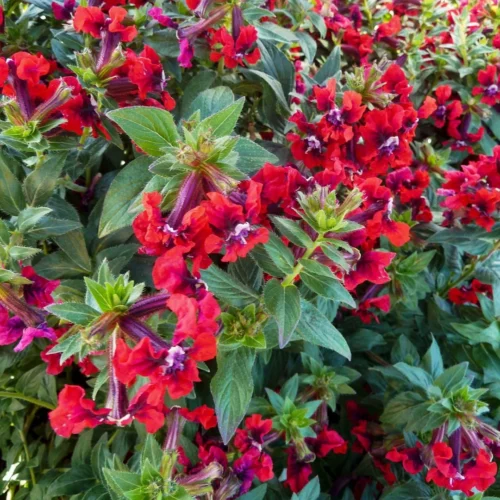
The Kopia flower is commonly known as Cineraria (Pericallis × hybrida) in some regions, and it is admired for its vibrant and striking flowers. Originating from the Canary Islands, this plant is widely grown as an ornamental flowering plant in gardens, hanging baskets, and containers.
Kopia flowers are characterized by their daisy-like appearance, featuring bright, bold petals in a range of colors, including purple, pink, white, blue, and red. The flowers have a central disc that contrasts with the colorful petals, and they bloom in clusters, creating a cheerful, attractive display. The foliage is generally rounded and soft, often in a deep green color, providing a pleasant contrast to the vivid blooms.
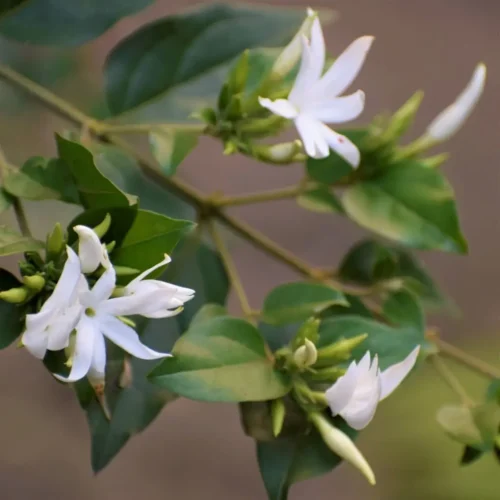
The Kund flower, also known as Indian Jasmine (Jasminum officinale), is a fragrant, delicate flower native to India and other parts of Southeast Asia. Revered for its sweet, intoxicating fragrance, the Kund flower is often used in religious and cultural practices, as well as for ornamental purposes in gardens.
The flowers of the Kund plant are small, white, and star-shaped, with five petals each. These flowers are highly aromatic, exuding a strong, pleasant scent that is especially noticeable in the evening and night, making them a popular choice for making garlands, perfumes, and traditional offerings. The plant’s leaves are dark green and glossy, providing a beautiful backdrop to the pristine white flowers.
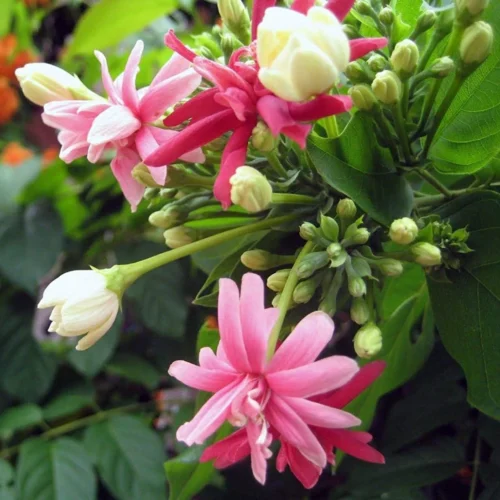
Madhu Malti (Combretum indicum), also known as Indian Honey Suckle, is a fragrant and colorful flowering vine native to tropical Asia. It is widely cherished for its sweet scent and vibrant blooms, making it a popular choice for gardens, trellises, and fences. The plant is often cultivated as an ornamental climber or shrub, adding beauty and fragrance to outdoor spaces.
The flowers of Madhu Malti are tubular and appear in clusters, with colors ranging from yellow to orange, red, and pink. These small, tubular blooms are known for their sweet fragrance, which becomes especially pronounced during the evening, attracting pollinators like bees, butterflies, and hummingbirds. The leaves of the Madhu Malti plant are dark green, lance-shaped, and serve as a perfect backdrop to the bright flowers.
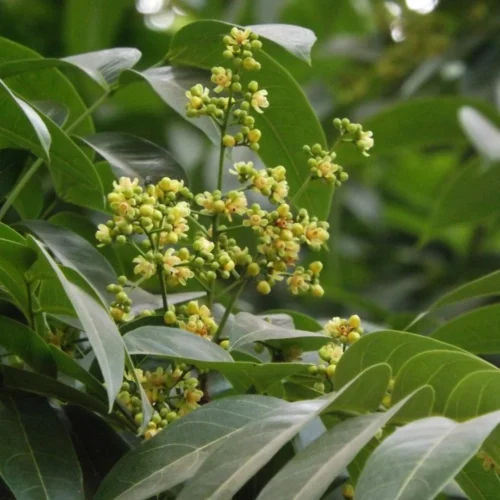
The Mahogany tree, scientifically known as Swietenia macrophylla, is a large, evergreen tree native to the tropical regions of Central and South America. While it is primarily known for its valuable hardwood, the Mahogany tree also produces small, fragrant flowers that are often overlooked compared to its iconic wood.
The flowers of the Mahogany tree are small, typically cream or yellowish-white, and grow in clusters at the tips of the branches. Each flower has five petals and is mildly fragrant, though not as intense as some other tropical flowers. These blooms appear during the tree's flowering season, typically in the spring or early summer.
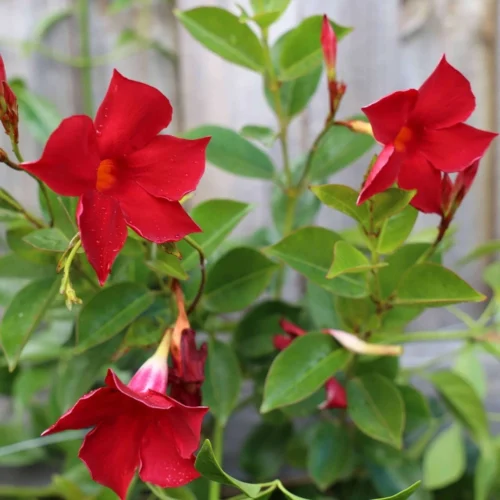
Mandevilla is a tropical and subtropical flowering plant known for its vibrant, trumpet-shaped blooms and lush, evergreen foliage. Native to Central and South America, Mandevilla is a popular choice for gardens, patios, and as a climbing vine, prized for its beauty and resilience in warm climates.
The flowers of Mandevilla are large, funnel-shaped, and come in a variety of bright colors, including pink, red, white, and sometimes yellow. The flowers are often accompanied by a subtle fragrance, though their striking appearance makes them stand out on their own. The plant's dark green, glossy leaves provide a perfect contrast to the vivid blooms, and the flowers appear in clusters, creating a dramatic display.
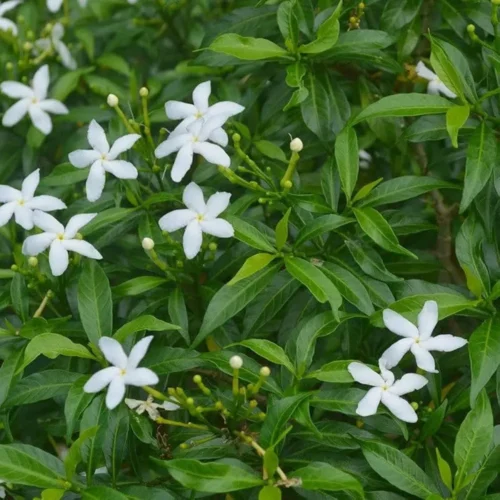
Mini Chandini is a compact variety of the Chandini flower, scientifically known as Jasminum sambac (Arabian Jasmine), which is highly revered for its sweet fragrance and ornamental beauty. This mini version retains the characteristics of the original Chandini jasmine, with a smaller, more compact growth habit, making it ideal for container gardening, smaller spaces, or indoor settings.
The flowers of Mini Chandini are small, white, star-shaped blooms, known for their intense and sweet fragrance. The flowers grow in clusters and are typically pure white, exuding a strong, intoxicating scent that is most pronounced in the evening, making them highly valued for both aesthetic and aromatic purposes. The plant also has dark green, glossy, and lance-shaped leaves, providing a lovely contrast to the bright, white blooms.
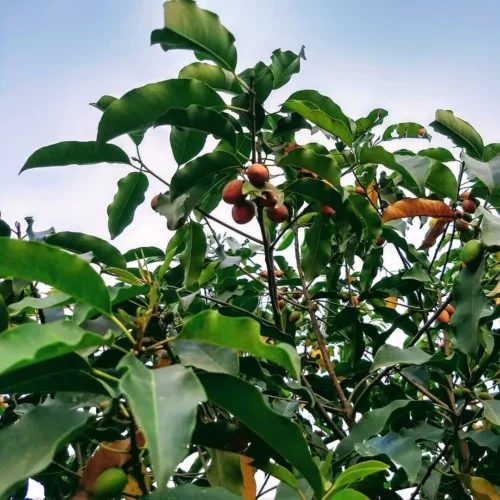
Moulshree (Melia azedarach), also known as Pride of India or Chinaberry Tree, is a deciduous tree that is well-known for its fragrant flowers and attractive appearance. Native to the Indian subcontinent and Southeast Asia, Moulshree is commonly planted for ornamental purposes in gardens, roadsides, and parks.
The flowers of Moulshree are small, trumpet-shaped, and typically pale lilac or white with a pleasant fragrance. They grow in dense clusters, creating a stunning visual display during the flowering season. The tree blooms in late winter to early spring, filling the air with its sweet, aromatic scent. In addition to its flowers, Moulshree also produces yellowish berries that attract birds and wildlife.
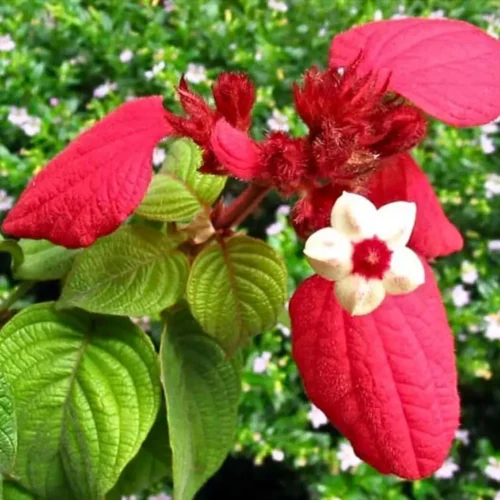
Mussaenda is a genus of flowering plants known for their striking, colorful blooms and lush green foliage. Native to tropical regions of Africa and Asia, Mussaenda is often grown as an ornamental plant in gardens, landscapes, and as a shrub or climbing vine. The plant is valued for its showy flowers and vibrant bracts, which are often mistaken for the actual petals.
The flowers of Mussaenda are typically small, tubular, and white or yellow, arranged in clusters. However, what makes Mussaenda particularly attractive are its large, colorful bracts that surround the flowers. These bracts come in shades of pink, red, orange, and yellow, depending on the variety, and they can last for weeks, creating a vibrant display. The bracts give the plant a tropical look, making it a favorite for gardeners looking to add bold color to their outdoor spaces.
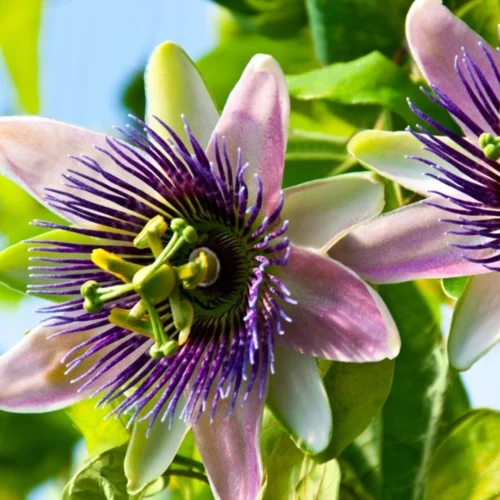
Passiflora, commonly known as Passionflower, is a genus of flowering plants known for their unique and intricate blossoms. Native to the Americas, particularly Central and South America, Passiflora species are often grown for ornamental purposes due to their striking and exotic appearance.
The flowers of Passiflora are large, with a distinct and complex structure. They typically feature five petals and five sepals, with a prominent, intricate corona (circular arrangement of thread-like structures) in the center, often in shades of purple, blue, white, or pink. The flowers also have an ornamental structure of filaments, stamens, and pistils, giving them a "clock-like" appearance. Some species of Passiflora can produce fruit, known as passion fruit, which is edible and prized for its sweet, tangy flavor.
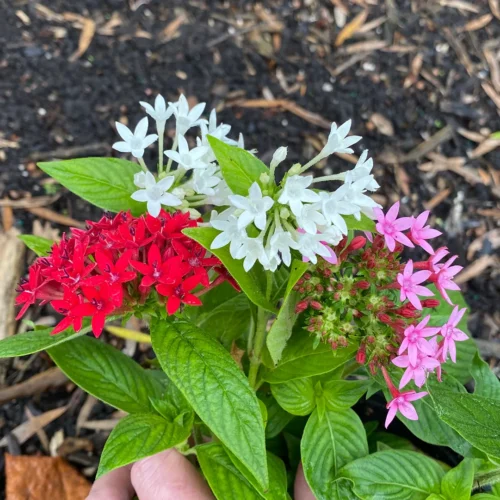
Pentas (Pentas lanceolata), also known as Egyptian Star Cluster, is a tropical shrub that is prized for its vibrant, star-shaped flowers and ability to attract pollinators. Native to East Africa, it has become a popular choice for ornamental gardening in both tropical and subtropical regions worldwide. Pentas is often grown in gardens, containers, hanging baskets, and as a border plant.
The flowers of Pentas are small, star-shaped, and grow in dense clusters at the ends of the stems. They come in a variety of bright colors, including pink, red, purple, and white. The vibrant blooms attract a range of pollinators, including butterflies, bees, and hummingbirds, making Pentas a great addition to any wildlife-friendly garden. The plant has lush, dark green leaves that provide a nice contrast to the colorful flowers.
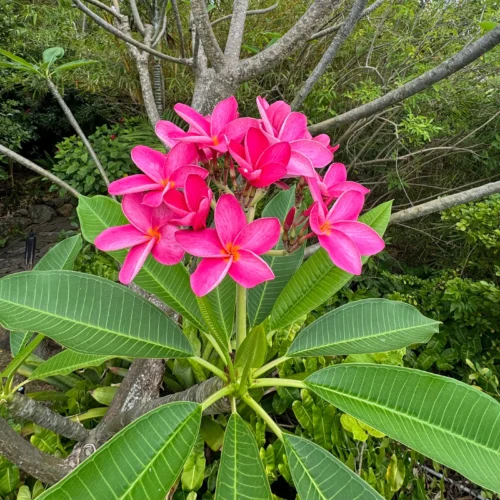
Plumeria, commonly known as Frangipani, is a tropical flowering plant known for its stunning, fragrant blooms and ornamental value. Native to the Caribbean, Central America, and parts of Mexico, Plumeria has become popular worldwide as a garden plant, often grown in tropical and subtropical climates. The plant is also widely used for making leis in Hawaii and other Pacific Islands, as its flowers are known for their rich, sweet fragrance.
The flowers of Plumeria are large, fragrant, and have five waxy petals that are typically white, pink, red, or yellow, often with a contrasting center. The flowers grow in clusters and have a strong, sweet aroma, which is most noticeable during the evening and night. Plumeria’s leaves are long, glossy, and dark green, providing a beautiful contrast to the bright, colorful flowers.
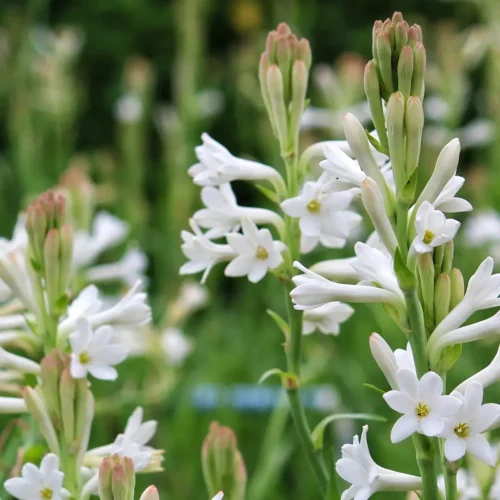
Rajnigandha, also known as Tuberose (Polianthes tuberosa), is a fragrant flowering plant native to Mexico, but it is widely cultivated in tropical and subtropical regions around the world. It is highly valued for its sweet, intoxicating fragrance and is commonly used in perfumes, incense, and garlands. The name "Rajnigandha" translates to "night-scented" in Hindi, as its strong fragrance becomes most noticeable at night.
The flowers of Rajnigandha are tubular, waxy, and white, growing in clusters along tall, slender stems. The plant produces long spikes of flowers that open one by one, starting from the bottom of the spike. The flowers are often large and fragrant, with a smooth, waxy texture that makes them visually appealing. Their sweet aroma is both soothing and romantic, making them highly prized for decorative and ceremonial uses.
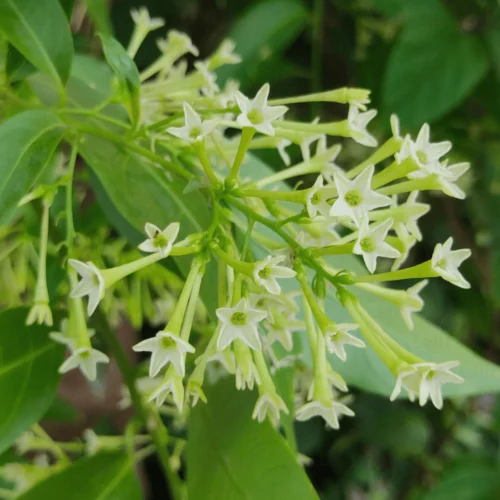
Ratarani, also known as Night Jasmine (Cestrum nocturnum), is a fragrant, night-blooming shrub native to tropical and subtropical regions of the Americas and India. It is highly valued for its intensely fragrant, white flowers that bloom in the evening and night, filling the air with a powerful, sweet scent. The name "Ratarani" translates to "Queen of the Night" in Hindi, highlighting its nocturnal blooming habits and intoxicating fragrance.
The flowers of Ratarani are small, tubular, and white or pale yellow in color. They grow in dense clusters and are most fragrant during the night, which is when they open fully. The sweet, jasmine-like aroma is often described as powerful and soothing, attracting pollinators like moths. The plant has long, slender stems with glossy green leaves that create a lush backdrop for the vibrant blooms.
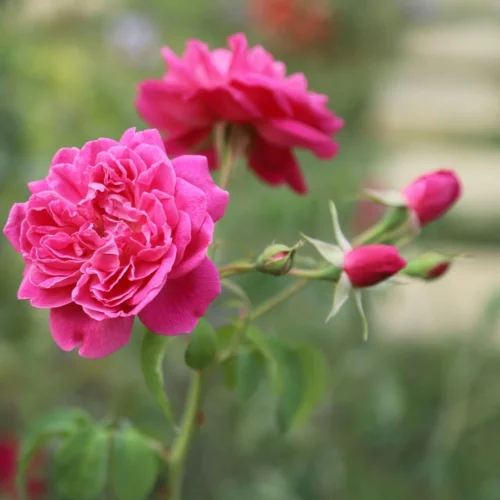
Rose Desi, also known as Indian Rose, is a variety of rose native to the Indian subcontinent and other parts of Asia. It is cherished for its timeless beauty, vibrant colors, and sweet fragrance. Unlike hybrid roses, Rose Desi often has a more natural, wild-growing appearance, making it highly valued for its traditional charm and rustic appeal.
The flowers of Rose Desi are typically medium to large-sized blooms with soft, velvety petals. They come in a variety of colors, including red, pink, yellow, and white. These roses have a strong, sweet fragrance, which makes them particularly popular in perfumes and for use in religious and cultural offerings. The petals of the Rose Desi are usually more fragrant and delicate compared to hybrid varieties, adding to their allure.
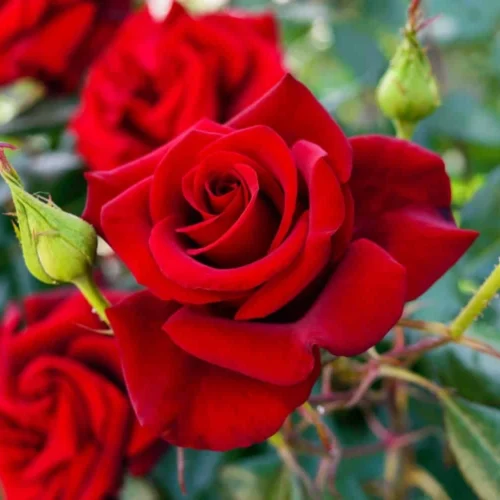
Rose Hybrid refers to a wide variety of roses that have been selectively bred for specific traits such as flower color, size, fragrance, disease resistance, and overall plant performance. These hybrid roses are a result of crossbreeding different species or varieties of roses to achieve improved characteristics. Hybrid roses are commonly grown in gardens, landscapes, and used in floral arrangements due to their versatility, beauty, and vibrant blooms.
The flowers of Rose Hybrid are large, full, and often come in a wide range of colors, including red, pink, yellow, white, orange, purple, and even multicolored variations. These roses typically have a high petal count and may be either single or double blooms. The petals are soft and velvety, and many hybrid roses have a strong, pleasant fragrance, although some varieties are more fragrant than others.
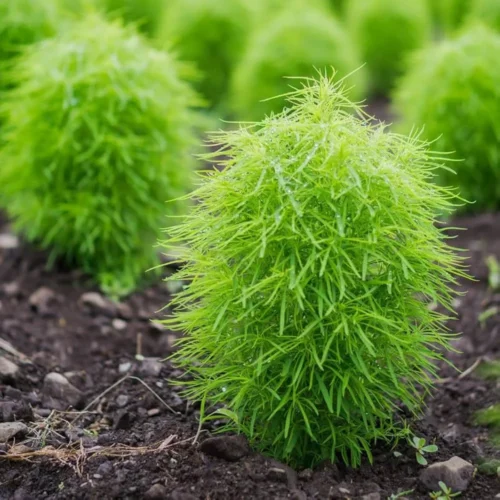
Far far away, behind the word mountains, far from the countries Vokalia and Consonantia, there live the blind texts. Separated they live in Bookmarksgrove right at the coast of the Semantics, a large language ocean. A small river named Duden flows by their place and supplies it with the necessary regelialia. It is a paradisematic country, in which roasted parts of sentences fly into your mouth.
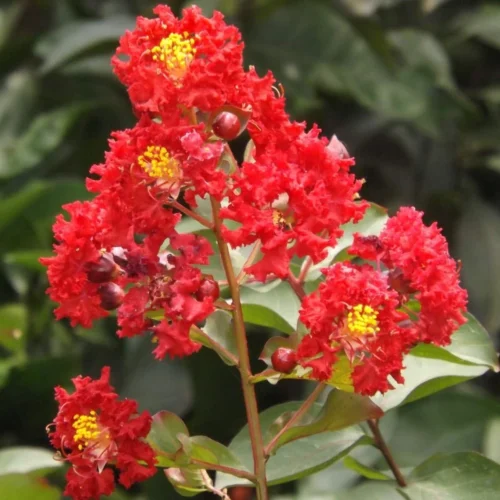
Savani (often referred to as Savan or Savana) is a flowering plant that is native to certain parts of India and other regions of South Asia. It is known for its elegant and aromatic flowers, which are prized in traditional and ornamental gardening. In some contexts, it may also refer to certain varieties of flowering shrubs or trees.
The flowers of Savani are usually small, fragrant, and come in a variety of colors depending on the specific species. They are often tubular or bell-shaped, with soft petals that can range from white to yellow, pink, or red, creating a delicate and appealing visual display. The fragrance of Savani flowers is mild but sweet, and they often bloom in clusters, making them a wonderful addition to gardens and landscapes.
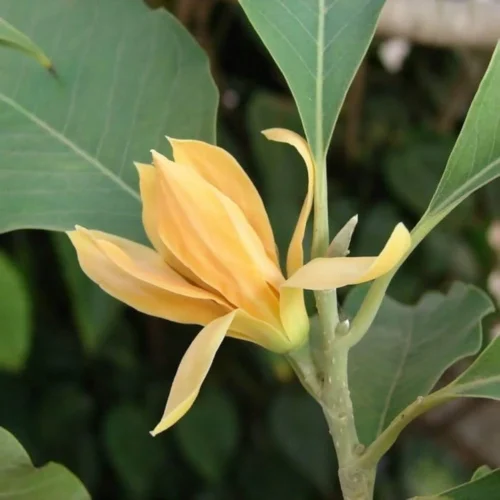
Swarna Champa, also known as Golden Champa or Michelia champaca, is a fragrant flowering tree native to Southeast Asia, including India, and widely cultivated for its aromatic blooms. It is a member of the Magnoliaceae family and is highly valued for its beautiful, golden-yellow flowers and strong, sweet fragrance. The Swarna Champa tree is often planted for ornamental purposes in gardens, parks, and temple compounds.
The flowers of Swarna Champa are large, with six waxy, golden-yellow petals that are arranged in a spiral formation around the center of the flower. They have a powerful, sweet fragrance, which intensifies in the evening, making them a favorite in perfumery and for making floral offerings. The tree blooms in the summer and continues flowering intermittently throughout the year. The foliage is dark green, shiny, and leathery, providing a lovely contrast to the bright, golden flowers.
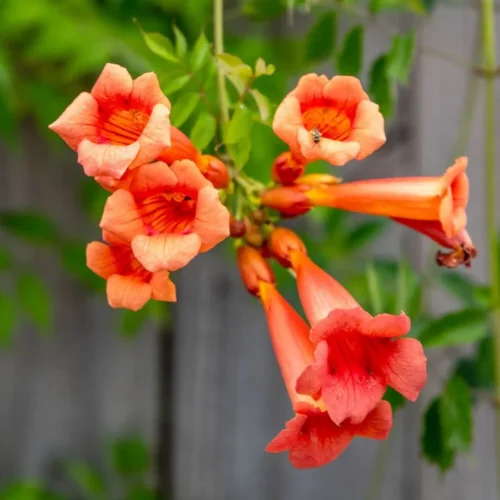
Tecoma is a genus of flowering plants belonging to the family Bignoniaceae. These plants are native to tropical and subtropical regions of the Americas, Asia, and Africa, and they are highly valued for their vibrant, trumpet-shaped flowers and vigorous growth. Tecoma plants are commonly grown as ornamental shrubs or small trees in gardens, landscapes, and parks, adding color and beauty to outdoor spaces.
The flowers of Tecoma are large, tubular, and typically come in shades of yellow, orange, red, or pink, depending on the species and variety. They are arranged in clusters at the tips of the branches, creating a striking visual display. The flowers attract pollinators such as hummingbirds, bees, and butterflies due to their bright colors and abundant nectar. The plant also has dark green, glossy, pinnate leaves that provide a lush backdrop for the colorful blooms.
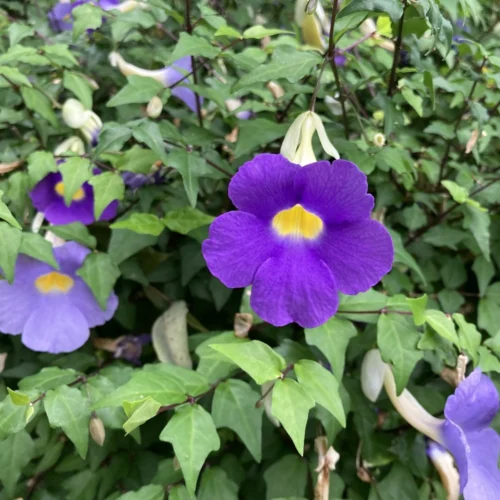
Thunbergia, commonly known as Black-eyed Susan Vine, is a genus of flowering plants in the family Acanthaceae. Native to tropical regions of Africa, Asia, and India, Thunbergia is often grown as an ornamental vine or trailing plant due to its vibrant, striking flowers and fast-growing nature. It is especially popular for its ability to cover trellises, fences, and arbors with ease.
The flowers of Thunbergia are typically funnel-shaped or tubular, with a prominent dark center, giving them the "black-eyed" appearance that makes them so distinctive. The petals are often bright in color, ranging from yellow, orange, and white to purple and blue, depending on the species or variety. The dark center contrasts beautifully with the colorful petals, creating a striking visual display. The flowers usually bloom in clusters, attracting pollinators such as bees, butterflies, and hummingbirds.
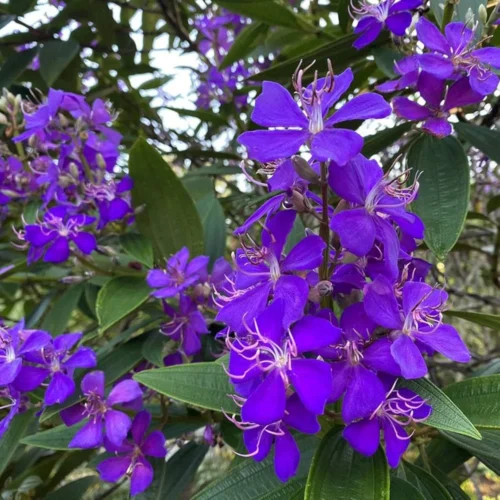
Tipu China, also known as Tipuana tipu or the Tipu Tree, is a flowering tree native to South America, particularly the subtropical regions of Argentina, Brazil, and Bolivia. It is often grown as an ornamental tree in gardens, streets, and parks due to its impressive size, shade, and striking flowers.
The flowers of Tipu China are bright yellow, with a peacock-like shape and long, slender petals. They grow in dense, pendulous clusters that give the tree a beautiful, golden canopy during its blooming period, which typically occurs in late spring to early summer. The vibrant yellow flowers attract pollinators, particularly bees, and provide a striking contrast to the tree’s green foliage. The flowers are followed by flat, woody seed pods that add interest to the tree even after the flowering season.
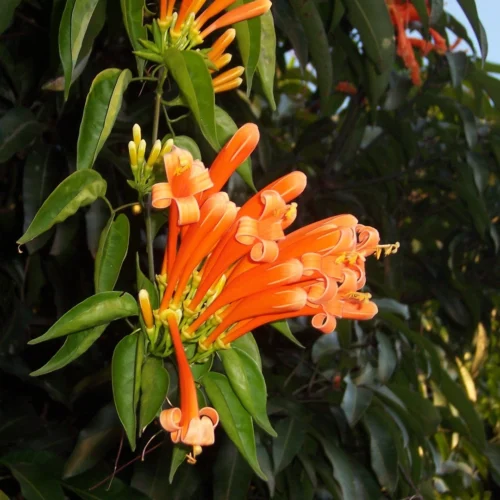
Venusta Begonia is a popular ornamental flowering plant known for its vibrant, eye-catching blooms and attractive foliage. It belongs to the Begoniaceae family and is a hybrid species that thrives in indoor and outdoor garden settings. While the plant is native to tropical and subtropical regions, it is widely cultivated in temperate areas for its stunning beauty.
The flowers of Venusta Begonia are small to medium-sized, featuring delicate petals that come in various shades of red, pink, white, and orange. The blossoms have a soft, ruffled appearance and are typically arranged in clusters, creating a charming, lush display. The flowers are complemented by the plant's ornamental, glossy, dark green leaves that have a unique texture and veining, adding to the overall visual appeal.